Before You Change the Admissions Policy, Understand What It Was Built to Protect
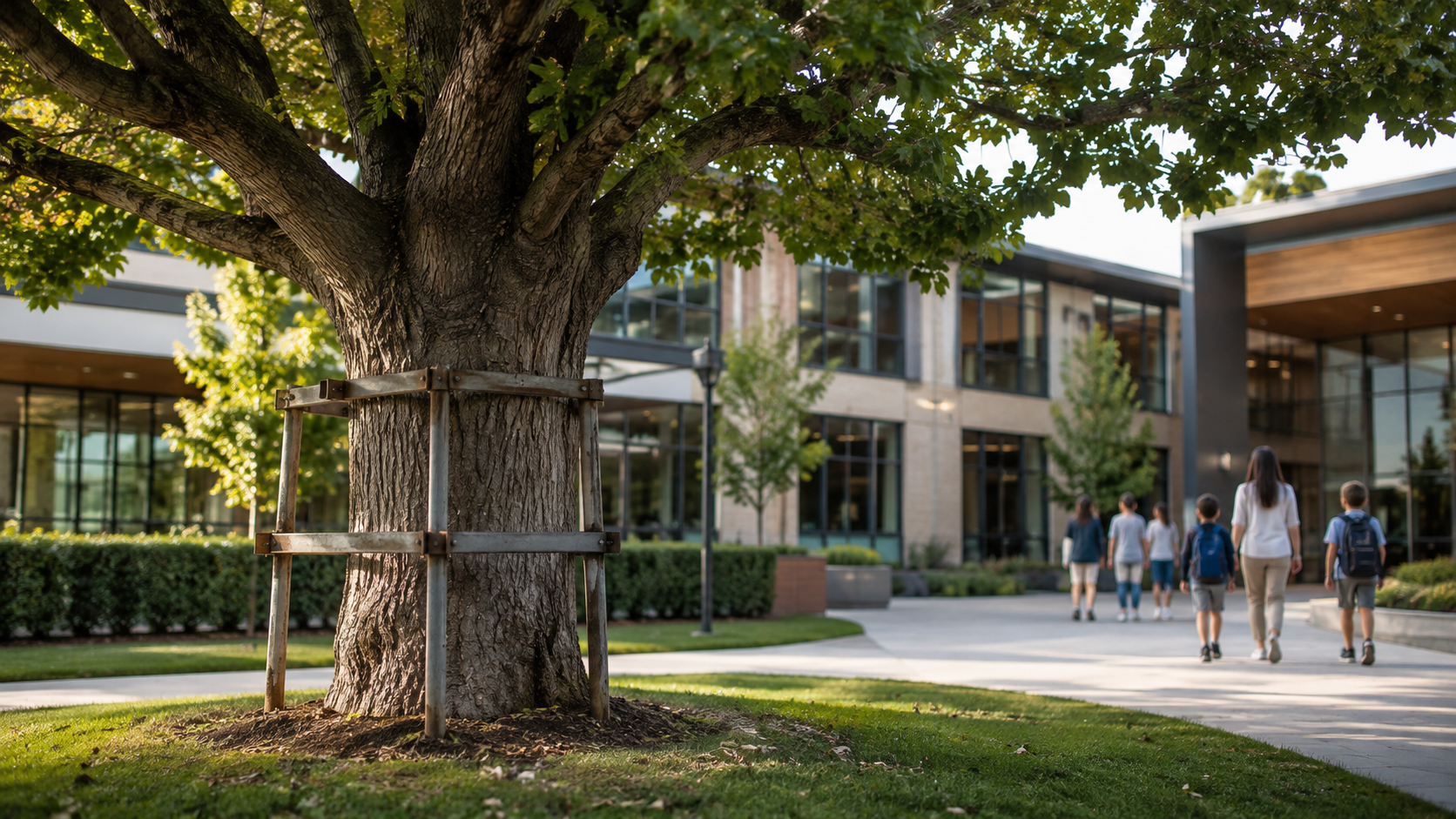
One of the first things a new Admissions Director often notices is a policy that seems unnecessarily complicated.
Every exception requires several layers of approval.
A placement rule feels more rigid than the current situation seems to require.
A late application that appears fairly straightforward is treated with surprising caution.
Ask why, and the answer may be vague. Someone remembers a problem several years ago. Another person says the process has “always been this way.” A few colleagues quietly agree that the rule probably needs another look.
Fresh eyes make these things easier to see.
They can also make history harder to see.
Before deciding whether an inherited policy still belongs, it helps to ask a different question first:
What was this policy built to protect?
The rationale may no longer be obvious. That does not mean there was never one.
Most Policies Have a Story Behind Them
A written policy records where an institution eventually landed.
It rarely records everything that pushed the institution there.
An additional approval layer may have emerged after several admissions decisions created tension between divisions. A rigid exception process may trace back to a period when inconsistent decisions created expectations the school could not sustain. A cautious placement rule may have followed repeated situations in which students entered without enough understanding of the support they would require.
Sometimes the origin is philosophical.
Sometimes operational.
Sometimes a rule is simply what remained after people tried to make sure the same problem did not happen twice.
Years later, the people involved may be gone. Capacity may have changed. Leadership may have turned over. The institution may remember the procedure more clearly than the conditions that produced it.
The policy stays.
The story fades.
In that sense, policy can function as institutional memory with authority attached to it.
That does not tell us whether the policy is still useful.
It tells us there is something worth understanding before rewriting it.
Admissions Policies Rarely Protect Admissions Alone
Admissions decisions travel.
A placement decision eventually enters a classroom.
A learning-support decision affects specialist capacity.
An exception made for one family can become part of the expectations surrounding the next.
A student admitted near the edge of the school’s capacity may require accommodations from faculty, counselors, divisional leadership, learning support, or other teams long after the admissions file has closed.
This is why friction can look very different depending on where someone sits.
What appears unnecessarily cautious from the admissions office may have developed because another part of the institution repeatedly absorbed consequences that Admissions could not see as clearly.
Policies can also carry commitments between departments, senior leadership, and sometimes governance. Those arrangements should not be treated as permanent simply because they exist, but they are part of what the policy has been holding together.
Changing the rule without seeing those relationships can solve one problem while reopening another.
Institutional Wisdom or Institutional Scar Tissue?
Inherited policy becomes harder to evaluate when protection and overprotection begin to look alike.
Some policies contain institutional wisdom.
They preserve lessons learned through experience and continue protecting the school from mistakes it would otherwise be likely to repeat.
Others resemble institutional scar tissue.
They formed around a difficult period or damaging experience, served a protective purpose, and remained after the original conditions changed.
A procedure created around limited learning-support capacity may still operate years after that capacity has expanded.
A restriction introduced after one damaging exception may eventually make reasonable judgment almost impossible.
A process designed during institutional instability may continue assuming instability long after the school has become more secure.
On paper, wisdom and scar tissue can look remarkably similar.
Both are often cautious.
Both usually have defenders.
Both can be supported by compelling stories about what happened before.
The difference emerges through inquiry:
What problem was this policy originally solving?
Does that problem still exist?
Who does the policy protect now?
Who is carrying the cost of keeping it?
What becomes possible if it changes?
What becomes vulnerable again?
Those questions move the conversation beyond whether the policy feels old, slow, or inconvenient.
They begin to reveal whether the institution is preserving a lesson or continuing to organize itself around a condition that no longer exists.
Exceptions Reveal the History Quickly
Policies often become most visible when someone asks the school to stretch.
A family is especially compelling.
A grade level is softer than expected.
The student would add something valuable to the community.
A senior leader knows the parents.
The case seems reasonable.
Then someone asks:
Why can’t we make an exception?
Sometimes the answer is that the school can.
But individual exceptions are usually easiest to defend when viewed individually.
Institutions experience them as patterns.
Staff remember previous cases. Families compare outcomes. Colleagues notice where flexibility appears and where it does not. What begins as a one-time decision can gradually become precedent.
So a colleague’s hesitation may have very little to do with the family currently under discussion.
They may be remembering what happened when the institution stretched in a similar direction before.
That history deserves investigation before caution is labeled resistance.
It also deserves reevaluation when the circumstances that created the caution have changed.
Understanding the History Does Not Mean Keeping the Rule
There is an obvious risk in this way of thinking.
“Understand why the policy exists” can easily become an argument for leaving everything alone.
It is not.
Some policies should be changed.
Some should be retired.
Others may need to be rebuilt because the school’s capacity, educational philosophy, market, leadership, or community has changed substantially since they were written.
Sometimes moving beyond an old policy is evidence that the institution learned what it needed to learn from the experience that created it.
Understanding the history simply makes the change more grounded.
It allows a leader to say:
We understand why this rule existed.
We know what it was protecting.
We can see what the institution learned from it.
And the conditions have changed enough that the response should change too.
That is a very different posture from arriving and concluding that the old way makes no sense.
Learn the Story Before Rewriting the Rule
New Admissions Directors are often hired because something needs to move.
Sometimes the movement is overdue.
But unfamiliarity and dysfunction are not the same thing.
Admissions policies can carry precedent, trust, institutional judgment, old compromises, and occasionally fear. Some of that history still belongs in the institution’s decision-making.
Some of it no longer does.
Before rewriting the rule, understand the story it is carrying.
Then decide how much authority that story should still have over what comes next.
by Carl E. Murray
Founder, Erlazion
[About Carl]